


Why ETL Steps Make Agile SAP BW/4HANA Development Possible
In many SAP BW/4HANA projects, transformation logic is embedded in long ABAP routines. It is difficult to read, difficult to test and often only really comprehensible for a few specialists. ETL Steps – Agile for SAP BW/4HANA starts right there.
The idea is clear: From the outset, new transformation logic is to be broken down into small, reusable ETL steps – implemented as ABAP classes, which are executed sequentially by a processor. This does not create a monolithic routine, but a comprehensible structure with clear responsibility.
Why this is more than a technical framework
ETL Steps changes not only the implementation, but also the transparency in the project. The application combines technical logic with technical requirements and makes the SAP BW/4HANA system self-descriptive.
- Any ETL step can be linked to Jira, Teams, or Planner tasks
- Documentation and ABAP class are directly accessible
- The complete ETL logic can be resolved via process chains, DTPs and transformations
- Fields and objects can be analyzed by Where-used
The ETL Browser as a Single Point of Truth
A central element is the ETL browser. It shows which ETL steps are actually executed in a process chain, a DTP or a transformation - including sequence, parameters and link to the technical requirement.
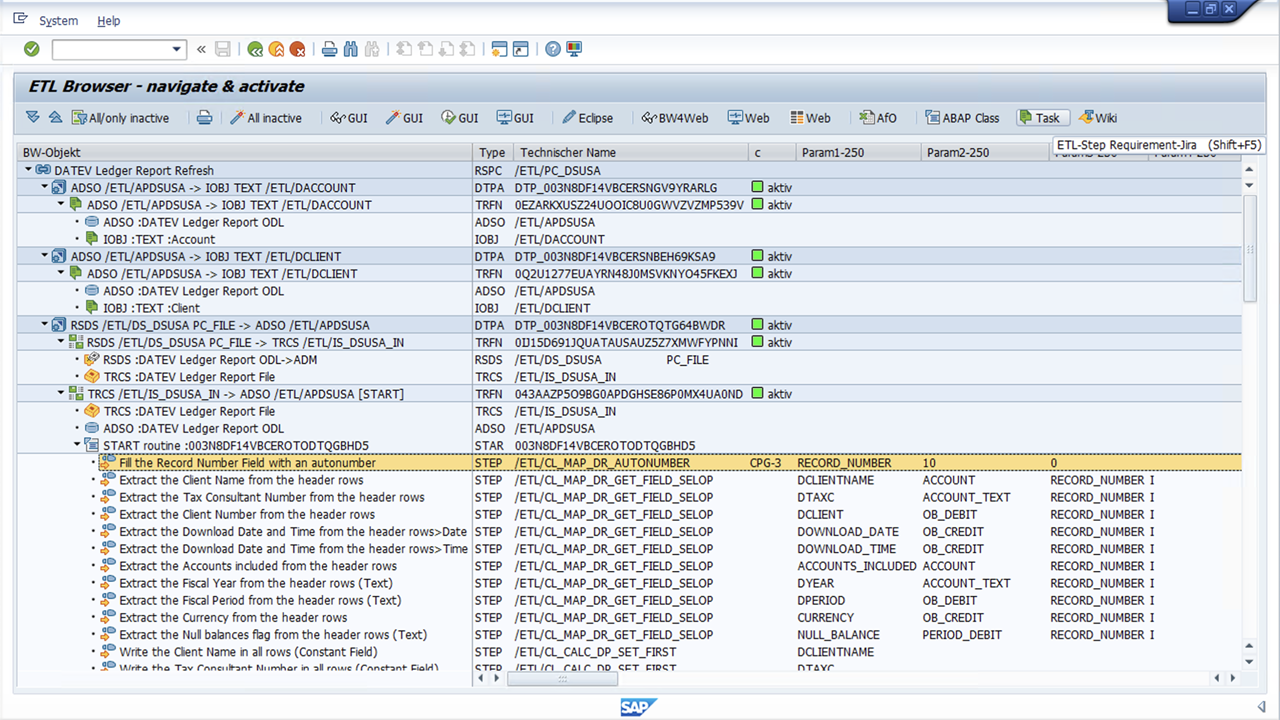
This creates a real single point of truth for the implemented logic. Both IT and the department can understand which rules are executed when and where.
Faster impact analysis, less uncertainty
Particularly valuable is the opportunity for impact analysis. Starting from a process chain, a DTP, an ADSO, an InfoObject or even individual search terms, you can analyze specifically where a certain logic is used.
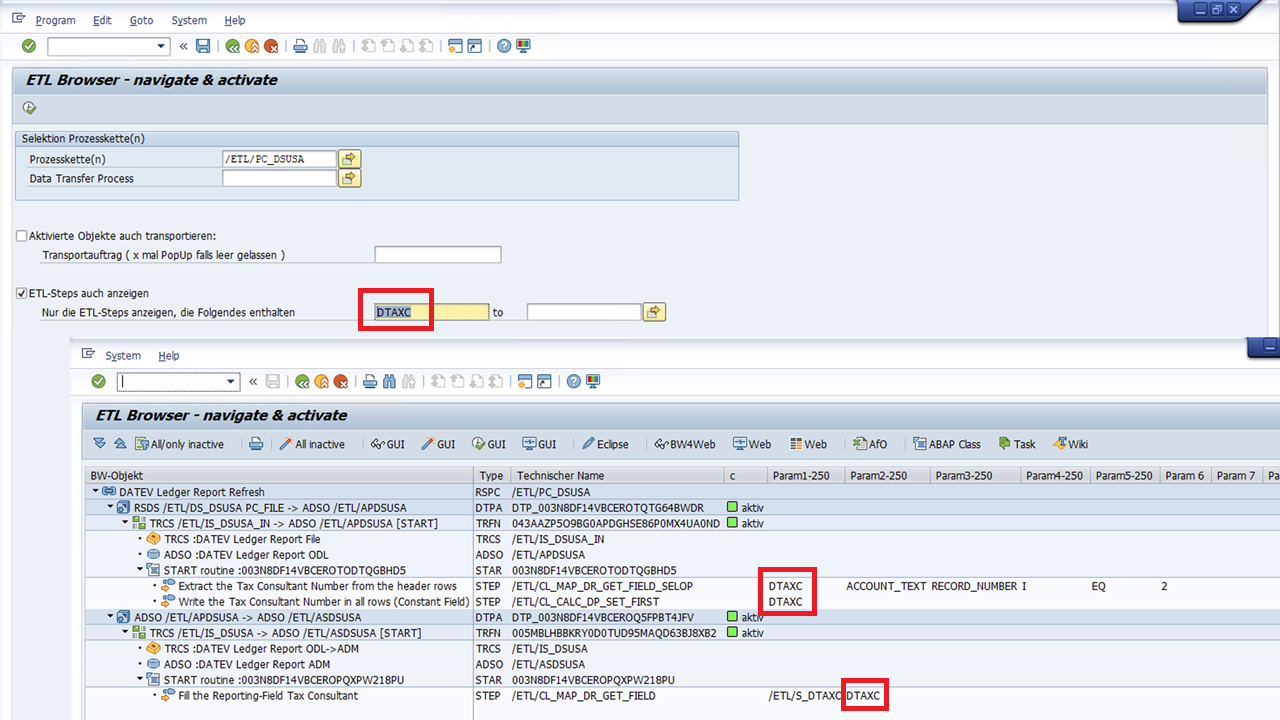
This makes decisions safer: Can a field be removed? What rules depend on it? Which process chains are affected? Instead of laboriously researching these questions, they become answerable in a structured way.
Agile development with controlled delivery
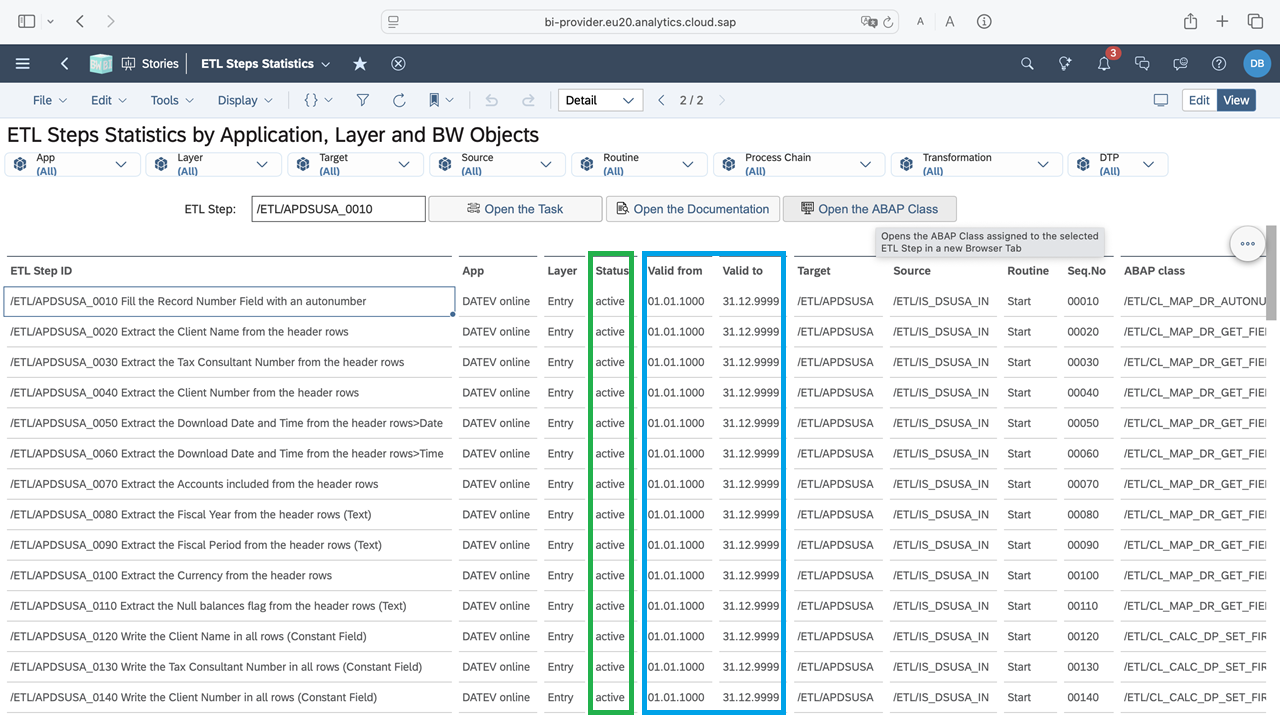
ETL Steps also supports agile delivery of new logic. Steps can be activated, deactivated or timed validated. New functions can be transported, tested and activated in a targeted manner without unnecessarily disturbing the ongoing operation.
Making Performance Visible
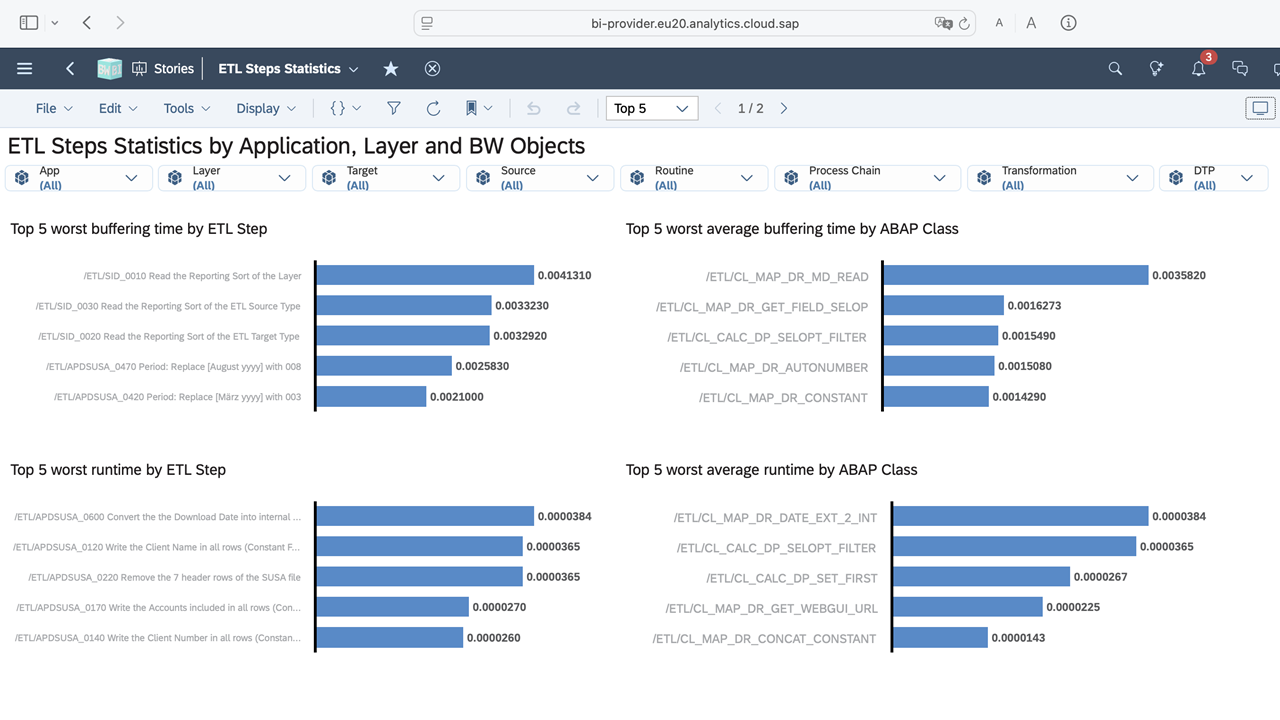
Another advantage is the transparency over runtimes. The runtime of individual ETL steps and ABAP classes becomes visible and can be evaluated in SAP Analytics Cloud. As a result, slow routines are not detected late, but made visible at an early stage.
conclusion
ETL Steps – Agile for SAP BW/4HANA is more than a developer framework. It is a methodological approach to make new BW logic clear, comprehensible and traceable right from the start. If you want to bring development, expertise and documentation closer together, you get a powerful tool for more transparency and less complexity.